
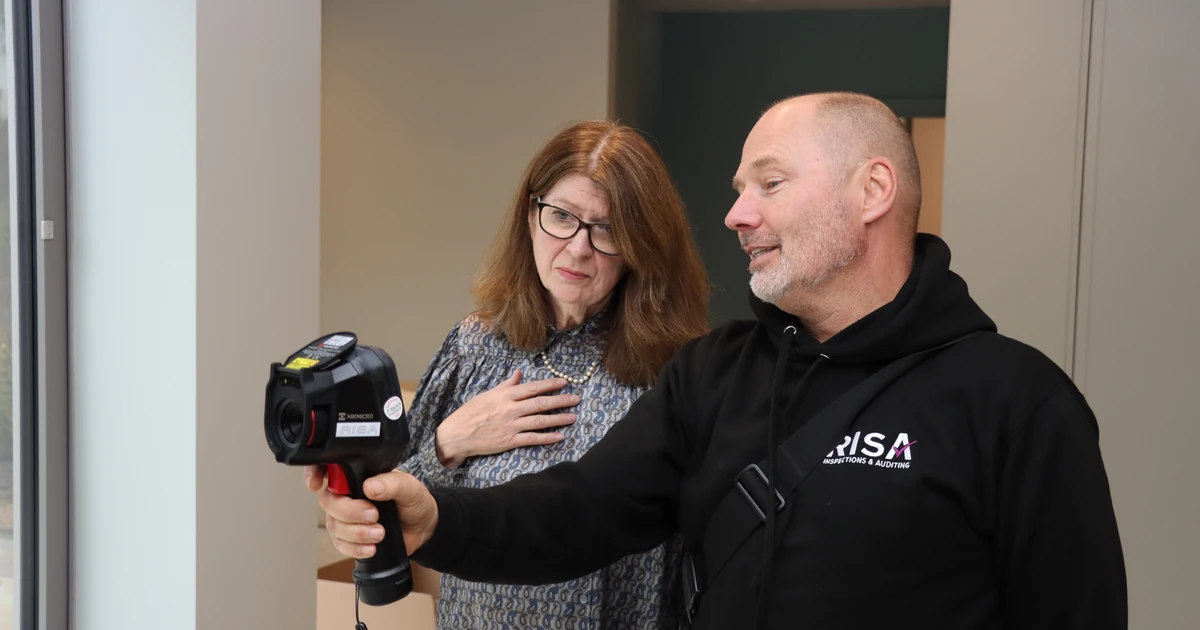
Most window and door installers do not involve RISA until they are already on the back foot – perhaps facing threatened or active legal action.
While installers can call on RISA for technical support at a much earlier stage, in practice the organisation is disproportionately brought in once a dispute has already escalated and positions have hardened.
“That isn't always the best time to bring us in,” explains Lee Galley, Inspection Manager, RISA.
“The earlier we can address the situation and give the consumer some confidence in what the installer is doing, the better.”
While RISA's involvement may not be required for straightforward domestic installations, early technical input can be invaluable on more complex projects, particularly where specification, exposure, design interfaces or contractual requirements introduce additional risk.
“We can get in at the very beginning of a project if you've got something really complex that's going on,” says Dave Mechem, Managing Director, RISA and FENSA.
“That early intervention allows us to get in there and spot those problems before they happen.”
Get the specification right
One of the most useful opportunities for early RISA input is during the specification and planning of larger or more complex contracts, where a small error can be repeated across many properties.
“The specification of a window or door is really important,” says Lee. “If you start off on the wrong foot, you're going to end up in a dispute situation.”
While a mistake at the specification stage may appear relatively minor when looking at an individual property, the consequences can be significant if the mistake is repeated across a large development.
“An example of that is a large housing association contract I visited in the Midlands a few years ago, where the survey information had missed the requirement for safety glass next to a door and that detail had then been repeated across every property,” explains Dave.
“If one piece of safety glass is missing, it's a problem that can quite easily be fixed. But in this case, there were hundreds of houses and hundreds of units that needed to be changed.
“It got very expensive very quickly for what was, in principle, a basic specification error. On a large contract, identifying that kind of issue early can prevent it being replicated across hundreds of units,” Dave warns.
Consider the location
Installers must also consider whether the products being specified are appropriate for the environment in which they will be installed.
This is particularly relevant in coastal and highly exposed locations – including parts of the South West, Scotland and other areas subject to severe weather – where RISA regularly encounters window and door installations that are not appropriately specified for the conditions they face.
“We can check those things up front to help installers establish whether the chosen product is capable of meeting the demands of its intended environment before it reaches site,” confirms Lee.
Bridging the gap
With the specialist knowledge needed to make important specification decisions often held by more than one person or organisation, RISA can also play a key role in bringing this information together.
“There is specialist knowledge that, a lot of the time, the developers themselves and the architects don't have,” explains Lee.
“There is sometimes a disconnect between the people that are actually purchasing these windows and the people that actually make those calculations about their air tightness and water resistance values, such as the systems companies, for instance. RISA sits in the middle to help link those parties together.”
Proactive, not reactive
For installers, RISA should not simply be viewed as a dispute resolution service to call once matters have become entrenched. Its expertise can be used proactively on complex specifications, larger contracts and emerging technical concerns to help identify problems earlier, reduce the likelihood of escalation and protect margins, reputation and customer relationships in the process.