Social housing retrofit used to be decided by the architect's specification. Now decarbonisation consultants and specialist delivery partners are having a real say, and they want suppliers who can show they cut carbon.
The UK's social housing retrofit programme is often described in terms of money, targets and deadlines. The bigger change may be in who makes the decisions.
Across the sector, new kinds of professional are sitting in the procurement process: decarbonisation consultants, cost consultants and charities set up to manage retrofit for housing providers.
They are changing how products are chosen, how schemes are sequenced and how contracts are awarded.
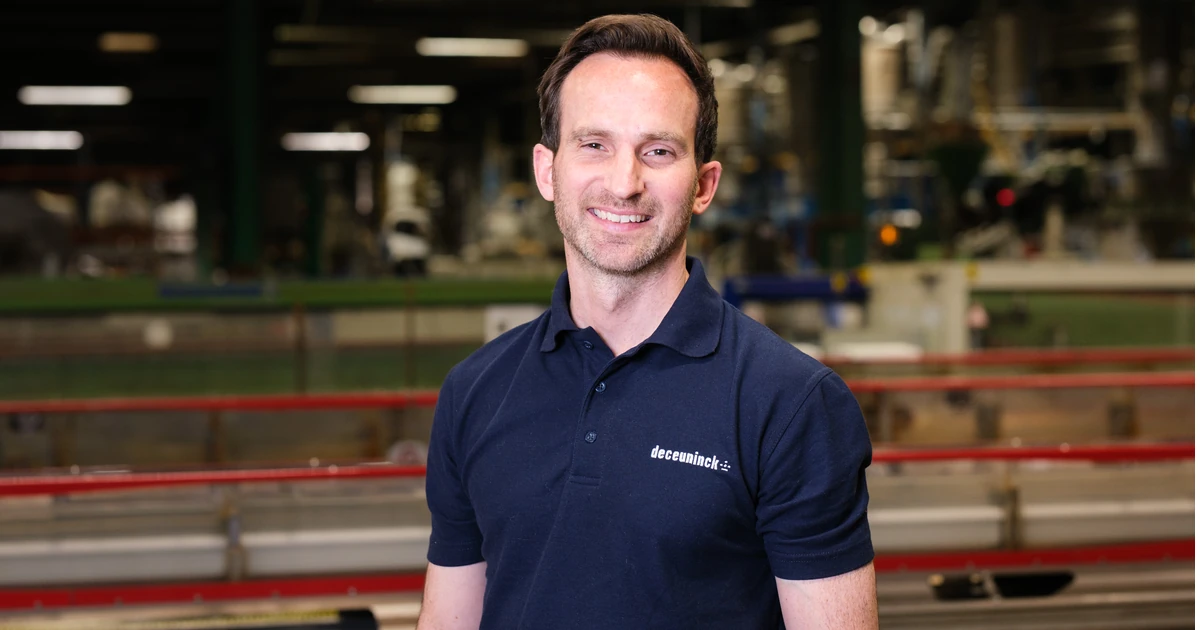
Reflecting on a recent round table event with Specify and Build Magazine, Peter Dyer, Head of Commercial Sales at Deceuninck, argues this has big ramifications for fabricators and installers already working in the sector - and those intending to target it.
The delegates ranged from passive house architects to designers of large self-build projects and volume-scale developers. He says the most important new voice in the room was one the industry has barely started to notice.
"There was an interesting guy there who was a decarbonisation consultant," he says. "In terms of stakeholders who are involved in decision making, they’re becoming more and more important when it comes to scheme viability.
“Are they on the radar of the industry? I have to be honest and say that I’m not sure that they are – but they are, and will continue to be hugely influential in what gets approval and which products are chosen.”
A clear direction of travel
The Government’s Social Housing Decarbonisation Fund – now replaced by the Warm Homes: Social Housing Fund – has put significant public investment behind improving the energy efficiency of England’s social housing stock.
Funding has supported improvements including insulation, windows and doors, solar PV and low-carbon heating across England’s social housing stock.
By the end of July 2026, around 160,100 measures had been installed in 73,600 homes through Waves 1, 2.1 and 2.2. Windows and doors have formed a meaningful part of that programme: under Wave 2.1 alone, around 19,200 window and door measures had been delivered, accounting for 16% of all measures installed.
That investment is now continuing through the Warm Homes: Social Housing Fund, which replaces the SHDF.
Government has allocated £1.29billion to Wave 3 for delivery between 2025 and 2028, with just under £1.15billion offered across 138 projects and successful applicants required to provide significant match funding.
The programme is focused on improving the energy performance of social homes, particularly those below EPC C, while supporting the transition to low-carbon heating. For the window and door supply chain, it represents a substantial forward pipeline of retrofit work in which improvements to the building fabric will continue to play an important role.
Proof not promises
“It’s obviously not only about retrofit”, Peter continues. “The Government has committed £39billion to deliver more social and affordable housing.
“The same principles apply to new build. The sector is looking to decarbonise schemes and that is an increasingly important factor in how they award contracts.
“Most importantly they want evidence and data. Forget ‘greenwash’ - you need to be able to deliver facts.”
Deceuninck is in this sense, ahead of the curve. It has committed through the Science Based Targets initiative, to reduce its absolute Scope 1 and 2 emissions by 60% by 2030 against a 2021 baseline.
It has also committed to reducing Scope 3 emissions by 48% per tonne of product by 2030, with a longer-term target of reaching net-zero greenhouse gas emissions across its value chain by 2050.
“It has perhaps taken the industry a little longer to join the dots between carbon reduction and sustainable manufacture and economic or financial benefit - but that tide is turning because people are awarding contracts based on a credible commitment to carbon reduction.
“If you’re a Deceuninck fabricator, You have a head start because we have done a lot of the leg work for you.”
This includes the investment it has made not only in its advanced recycling facility, but also its approach to the development of a new generation of products.
Elegant, its flagship composite window system, the 76mm tilt-and-turn system achieves U-values as low as 0.7W/m²K.
It can also be manufactured using Deceuninck’s ThermoFibra glass-fibre sash and Forthex insulated thermal reinforcement, which compared to an equivalent traditionally steel-reinforced window, delivers a 30% increase in thermal efficiency with a 40% saving in materials and weight.
Just as significantly it has also been designed to be 100% recyclable at end of life. Something, which Peter suggests resonates with a new generation of decision makers. “The focus on decarbonising social housing extends equally to end of life”, he says.
Balancing the books
Even so, he points out that despite the decarbonisation agenda, price point continues to exert an influence on the award of social housing contracts, new build or retrofit.
"Referring back to the roundtable, the one thing that everyone unanimously agreed upon was that material inflation was putting pressure on scheme viability”, he says.
“Given that, there is a lot of focus on making sure the figures stack up and modelling the performance of each product alongside that of other materials to develop a comprehensive understanding of the return – carbon, or otherwise on spend.
He points out that while Elegant goes as low as U-values as low as 0.7W/m²K, more importantly in the current specification debate, Elegant can comfortably get down to 1.2W/m²K – double glazed.
“On a large scheme that can represent a major saving against an unnecessary move to triple glazing throughout”, Peter adds.
“It came through loud and clear - the social sector is committed to decarbonisation, but remains price sensitive.
“Deceuninck has led the industry in innovation in sustainable window and door manufacture. Through products like Elegant we can supporting our customers in contributing to through-life decarbonisation, but also through innovations on the near horizon, will be able to offer an even more flexible solution to our customers.
“If you’re in or a considering a move into the social sector, it’s an opportune time to talk to us.”